
Reactive vs. Proactive Energy Buyers: Which One Are You?
Reactive vs. Proactive Energy Buyers
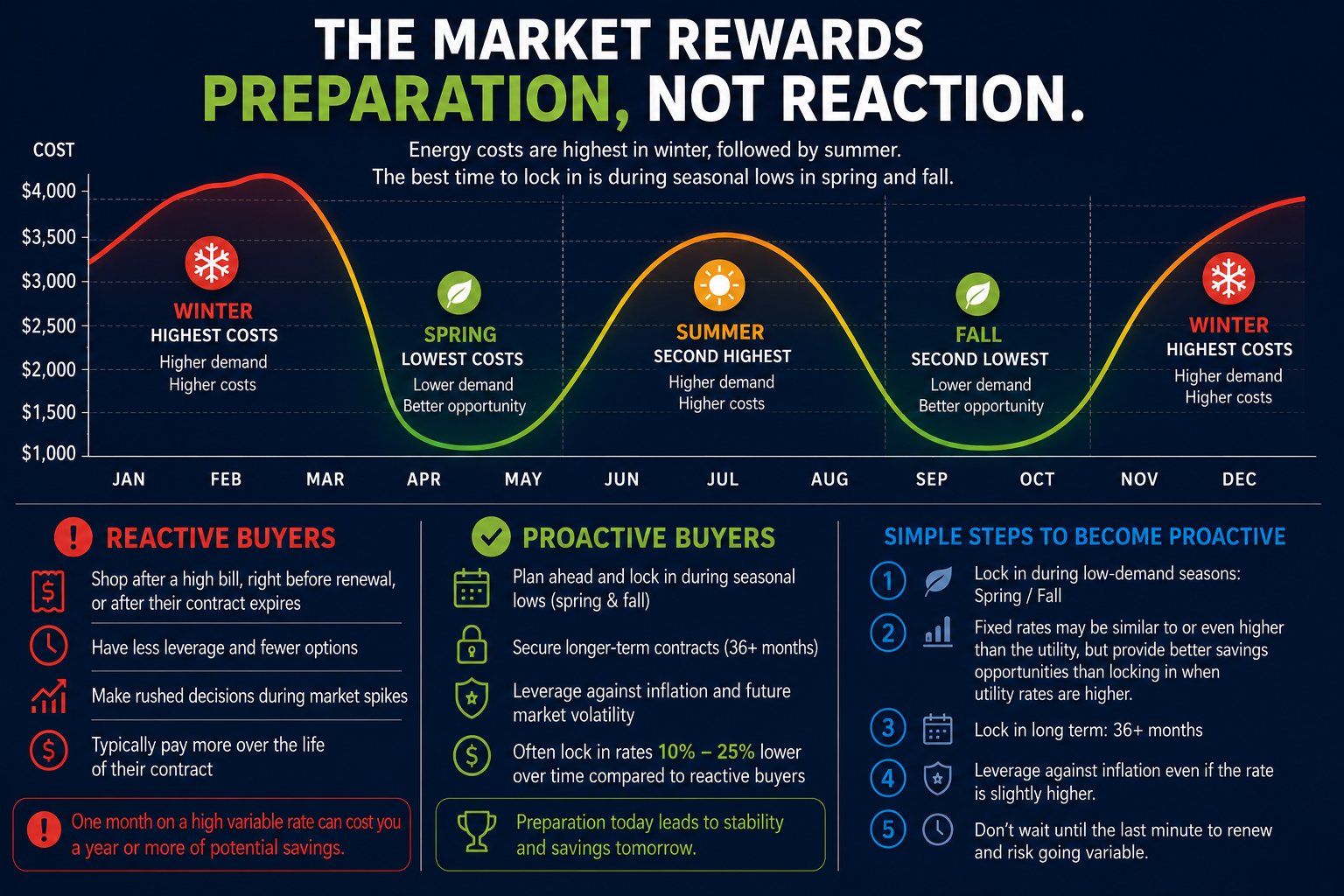
The energy market rewards preparation — not reaction.
One of the biggest mistakes businesses make is waiting too long to review their energy contracts. By the time many companies start shopping, they’re already dealing with:
a sudden spike in utility bills
an expiring contract
variable rates
or market volatility that limits their options
That’s what we call a reactive buyer.
Reactive buyers typically make decisions under pressure, which often leads to:
fewer supplier choices
rushed decisions
less negotiating leverage
and higher long-term energy costs
What Proactive Buyers Do Differently
Proactive buyers approach energy purchasing strategically.
Instead of waiting for a problem, they monitor market conditions and secure pricing during historically lower-demand seasons.
In most deregulated markets:
Winter (February–March) tends to produce the highest pricing
Summer (June–July) is typically the second-highest pricing period
Spring (April–May) often creates the lowest pricing opportunities
Fall (September–October) is usually the second-lowest pricing window
Why does this happen?
It comes down to demand and volatility.
Extreme temperatures increase energy demand, which often pushes supply costs higher. During lower-demand seasons like spring and fall, markets are generally calmer, giving businesses better opportunities to secure long-term pricing.
Why Timing Matters
Businesses that wait until:
their contract is about to expire
they receive a high utility bill
or they accidentally roll onto variable pricing
are usually buying during periods of stress and market uncertainty.
Proactive buyers avoid that situation entirely.
By planning ahead, they can:
compare more supplier options
evaluate contract structures properly
secure budget stability
and take advantage of more favorable market conditions
Long-Term Contracts Can Create Long-Term Savings
One common misconception is that a fixed rate is only worthwhile if it’s immediately lower than the utility.
That’s not always true.
In many cases, proactively locking a longer-term agreement (36+ months) during seasonal lows can provide:
protection against inflation
insulation from future market spikes
more predictable budgeting
and significantly lower costs over time
Historically, businesses that secure contracts proactively during softer market periods can often achieve pricing outcomes that are 10–25% more favorable over the life of the agreement compared to buyers who wait until volatility increases.
Don’t Underestimate Variable Rate Risk
One month on a high variable rate can wipe out a year — or more — of potential savings.
That’s why timing and preparation matter so much in energy procurement.
The strongest buyers don’t wait until the market forces a decision.
They prepare before the pressure hits.
Final Thought
This concept applies to almost every area of business:
Proactive decisions typically outperform reactive ones.
But in energy, the impact is especially measurable.
The businesses that consistently perform best are usually the ones that:
review contracts early
monitor seasonal trends
secure pricing before volatility arrives
and think long term instead of month to month
The market rewards preparation.
Not reaction.
Review Your Energy Options