
Gas: From Physical Principles to Smarter Natural Gas Choices with ABC Energy
Understanding gas starts at the molecular level and ends at your monthly energy bill. This article connects the dots between the science of how gases behave and the practical decisions you make about natural gas supply, safety, and pricing every day.
Overview: What "Gas" Means in Science and in Your Energy Bill
In physics, a gas is one of the fundamental states of matter. Its particles move freely with large spaces between them, giving gases their ability to expand, compress, and flow in ways that liquids and solids cannot. Pressure, volume, and temperature govern everything a gas does, from filling a balloon to powering a turbine.
On your energy bill, "gas" almost always means natural gas, a hydrocarbon fuel extracted from underground reservoirs and delivered through pipelines to your home or business. Natural gas supplies nearly one-quarter of U.S. energy, making it one of the most important fuels in the country. The story of how molecules bounce off container walls in a chemistry lab is the same story that explains why your furnace heats your home on a cold day in January.
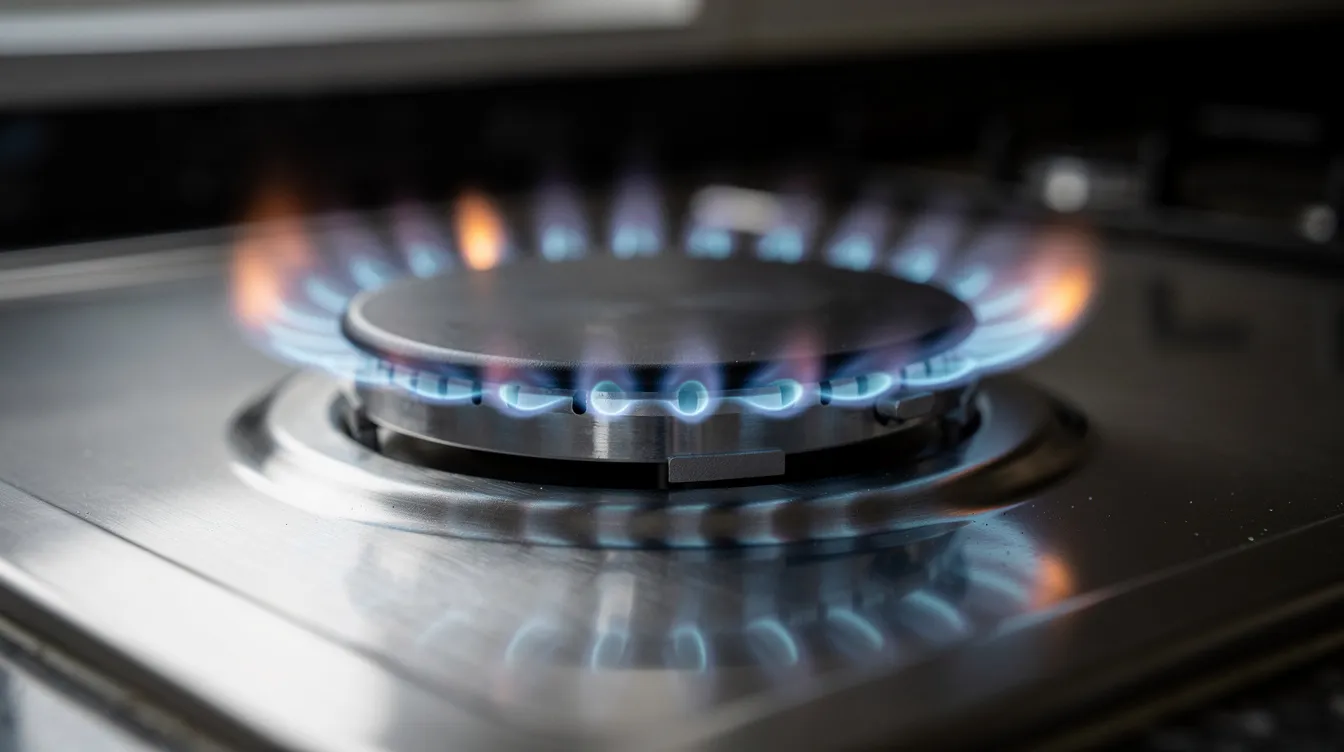
Think about boiling water on a kitchen stove. The flame beneath the pot is natural gas combusting with oxygen, producing heat, carbon dioxide, and water vapor. The steam rising from the pot is water transitioning into its gas phase, expanding rapidly as temperature climbs. Both phenomena, the burning fuel and the rising steam, follow the same physical principles.
ABC Energy is a marketplace and energy consultancy designed to help customers in deregulated markets across New York, New Jersey, Connecticut, and Pennsylvania compare natural gas supply rates with transparent billing and no hidden fees. Throughout this article, you will learn how gas behaves at the molecular level, what natural gas is, how pricing works, how ABC Energy compares offers, and how performing security verification on our website protects your information.
Physical Characteristics of Gases: The Four Key Properties
Every gas, whether it is pure methane in a pipeline or helium in a party balloon, is described by four macroscopic variables: pressure, volume, temperature, and amount (measured in moles).
Gas pressure is the average force per unit area exerted by gas particles as they collide with container walls. Volume is the space the gas occupies. Temperature reflects how fast molecules move on average. Amount tells us how many molecules are present. Gases have low density and viscosity compared to liquids and solids because their particles are spread far apart with only weak intermolecular forces, including Van der Waals and electrostatic interactions, holding any influence.
Looking closer at how these properties interact:
Compressibility refers to the variation of gas density under pressure. Squeeze a gas and its particles pack tighter; release pressure and they spread out again.
Density is the amount of mass per unit volume of a gas. Because gas particles are widely separated, density is typically very low compared to liquids.
Specific volume is the ratio of volume occupied by a unit mass of gas, essentially the inverse of density.
Diffusion is a gas's tendency to spread spontaneously from areas of high concentration to low. This is why the smell of a natural gas leak in a basement can travel through an entire building within minutes.
At fixed temperature, P × V stays nearly constant (Boyle's law). At fixed pressure, volume grows proportionally with temperature (Charles' law). These same physical characteristics underpin how natural gas moves through pipelines, compressor stations, and distribution systems across U.S. cities every day.
Macroscopic vs. Microscopic View: How Gases Really Behave
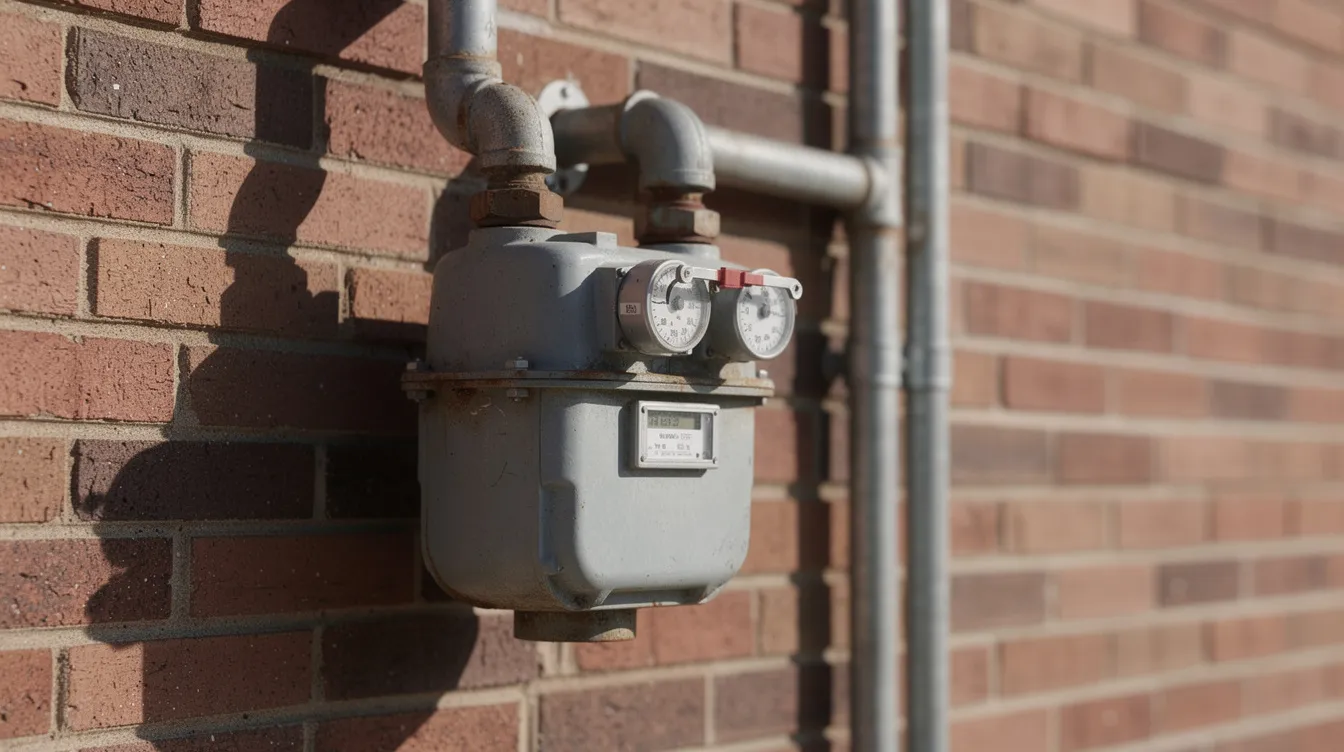
When you read a pressure gauge on a gas meter, you are observing a macroscopic measurement, the collective result of trillions of molecules slamming into a surface every second. At the microscopic level, each molecule travels in a straight line until it collides with another molecule or a wall, then changes direction randomly.
The macroscopic gas laws capture average behavior:
Boyle's law: pressure and volume are inversely related at constant temperature.
Charles' law: volume and temperature are directly proportional at constant pressure.
Avogadro's law: at the same pressure and temperature, equal volumes of different gases contain the same number of molecules.
From the microscopic perspective, kinetic theory assumes perfectly elastic collisions and ignores intermolecular forces. The speed of a gas particle is proportional to its absolute temperature, meaning hotter gases have faster-moving molecules. This is an approximation, but it works remarkably well under everyday conditions. The pressure displayed on your home gas meter is simply the average force from countless molecular impacts per second, a direct link between invisible molecular motion and the number on your bill.
Kinetic Theory, Ideal Gases, and Real Gases in the Energy World
Kinetic theory bridges the gap between what molecules do and what engineers measure. Heating a gas increases average molecular speed, which raises collision frequency and pressure at constant volume, or causes expansion at constant pressure.
The ideal gas law is expressed as PV=nRT, where P is pressure, V is volume, n is the number of moles, R is the gas constant, and T is absolute temperature. This model treats molecules as point particles with no intermolecular forces and a compressibility factor of Z = 1. It works best at low pressures and moderate temperatures. Noble gases include helium, neon, and argon and are unreactive under standard conditions, making them close to ideal behavior.
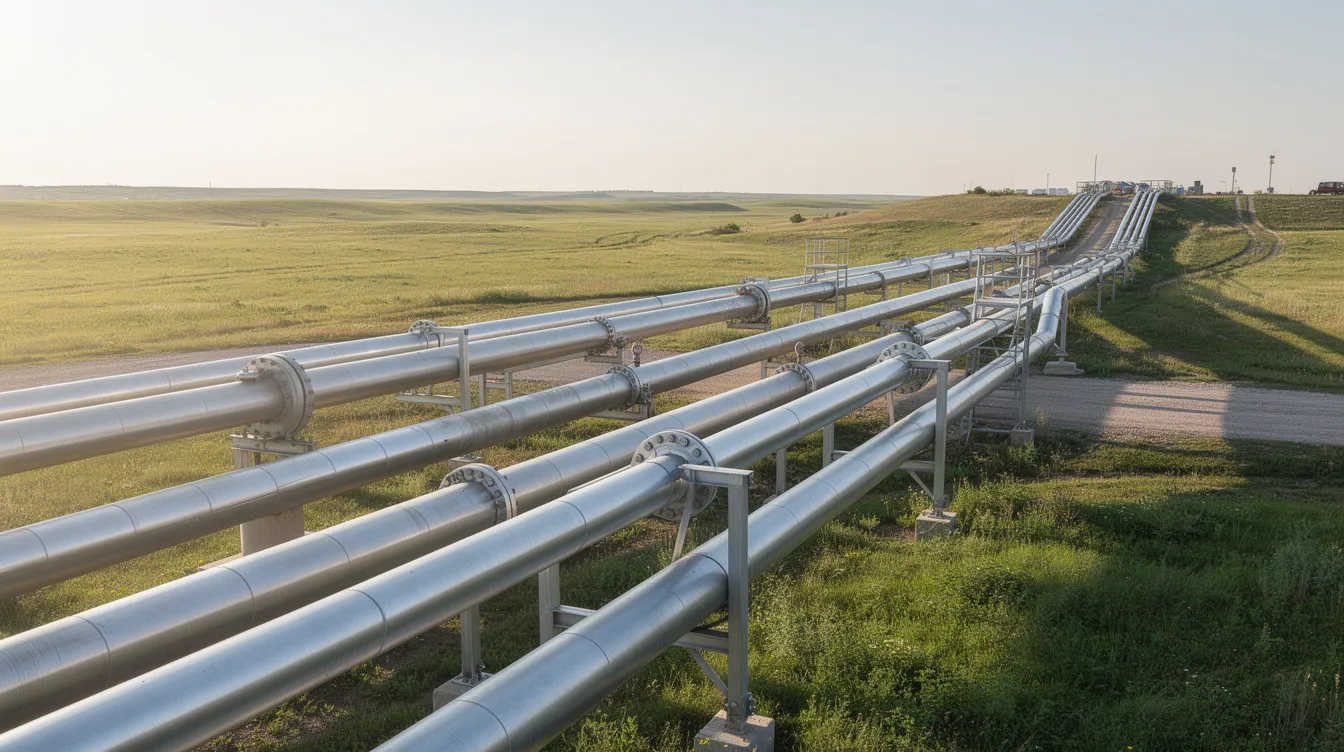
Real gases deviate from this model. Molecules attract each other at moderate distances and repel at very short range, requiring correction terms (such as those in Van der Waals-type equations) at high pressure or low temperature. This matters enormously in the energy world: engineers transporting methane-rich natural gas through high-pressure transmission pipelines must account for non-ideal behavior to calculate flow rates, prevent condensation, and avoid hydrate formation. Models like Peng-Robinson equations of state are standard tools when planning storage, compression, and liquefied natural gas (LNG) operations across North American infrastructure.
Natural Gas 101: What It Is and How It's Used in the U.S.
It is worth distinguishing clearly: "natural gas" is a specific fuel, primarily methane (CH₄) extracted from underground formations, not an abstract physics concept. Before reaching your home, raw natural gas is processed to remove water vapor, carbon dioxide, sulfur compounds, and heavier hydrocarbons like ethane and propane. The result is pipeline-quality dry gas, with transmission-grade gas averaging roughly 93% methane.
Natural gas accounted for 36% of U.S. primary energy consumption in 2023, and natural gas consumption reached record levels in the U.S. in recent years. Over 189 million Americans use natural gas for applications including space heating, water heating, cooking, and clothes drying. More than 189 million Americans rely on it across residential, commercial, and industrial sectors. Natural gas supports millions of jobs and contributes significantly to GDP, though it can create significant economic activity but also environmental costs.
Growth continues: more than one new residential customer signs up every minute, and over 60 businesses start new gas service daily. To avoid confusion with related fuels, note that Liquefied Petroleum Gas (LPG) consists of hydrocarbon gases used for heating and cooking but is a different product from pipeline natural gas. Syngas is an artificial gas mixture primarily of hydrogen and carbon monoxide used in industrial processes. And gasoline is a liquid derived from crude oil primarily used in internal combustion engines, not a gas at all despite the name.

Natural Gas Markets, Rates, and How ABC Energy Helps You Shop Smarter
In states like New York, New Jersey, Connecticut, and Pennsylvania, energy markets are deregulated. This means you can choose who supplies your natural gas commodity while your local utility continues to deliver it through existing pipes and maintains infrastructure and safety. The fact that you have a choice is where savings begin.
Common rate structures include:
Fixed-rate plans that lock in a price per therm or Ccf for a set term (often 6–12 months), protecting you if market prices rise.
Variable rates that float with market conditions, sometimes offering lower costs in mild months like june but higher risk in peak months like october.
Guaranteed savings programs that ensure your annual supply cost stays below what the default utility rate would have charged.
ABC Energy's marketplace lets residential and small commercial customers compare live natural gas offers from vetted suppliers in real time, similar to how flight comparison sites work. Tools like URate and EZ Rate use your past consumption data to estimate results for specific usage profiles. Changes in gas prices influence electricity prices due to natural gas's role in electricity generation, so making the right supply choice ripples across your total energy spend. For families facing financial hardship, LIHEAP provides grants to help families afford gas bills-a resource worth exploring alongside rate shopping.
If you are choosing an ESCO for the first time, ABC Energy's commitment to transparent billing means every fee is visible, contract terms are clear, and there are no surprises.
Safety, Leaks, and Environmental Impact of Natural Gas
Natural gas in its raw form is odorless. A chemical called mercaptan is added during processing to give it a distinctive sulfur or rotten-egg smell so leaks are immediately noticeable. If you ever smell gas in your home, leave the area immediately. Emergency procedures include calling 911 for gas leaks, then contacting your local utility's emergency line. Never try to find the leak yourself.
The physics of diffusion explains why this matters: gas molecules spread from high-concentration areas to low-concentration areas rapidly, meaning a small leak in an enclosed space can accumulate to unsafe levels in a short time. Pressure differences between the pipe interior and surrounding air drive gas outward through any breach.
On the environmental side, natural gas combustion produces less carbon dioxide and particulates per unit of heat than coal or oil, but upstream methane leakage remains a potent greenhouse concern. The good news: natural gas emissions have dropped 70% since 1990, driven by pipeline replacement programs that swapped aging cast iron and unprotected steel mains for modern plastic and protected steel. Natural gas is essential for improving the environment when paired with continued infrastructure innovation and better methane leak detection technology. Utilities and security service providers are committed to deploying advanced sensors, smart meters, and data analytics to keep communities safe while supporting climate goals.
Performing Security Verification on Energy Marketplaces (Including ABC Energy)
When you visit an energy comparison website to shop for rates, the site needs to protect sensitive data: your account details, usage history, contract terms, and live pricing feeds. That is why ABC Energy and similar platforms use automated security verification as a layer of defense.
Here is what a typical verification process looks like:
The system detects unusual traffic patterns and verifies whether the visitor is a legitimate human user or a bot.
A verification page is displayed, running quick checks such as JavaScript challenges, IP reputation analysis, and behavioral analysis.
When the check passes, a verification successful status appears, and you proceed to the rate comparison page without waiting more than a few seconds.
Behind the scenes, the security service blocks malicious bots that attempt to scrape supplier pricing or flood the site with fraudulent requests. If troubleshooting is needed, the system may show a respond ray id that support teams can use to diagnose the issue.
This process does not affect your credit check, enrollment, or contract. It simply maintains website integrity. If verification fails repeatedly, check that your browser allows JavaScript, disable aggressive ad blockers, and find the support link on the page, or contact ABC Energy directly for assistance.
Digital Accounts, Smart Tools, and How to Manage Your Natural Gas Usage
Modern digital portals put you in control of your natural gas costs. Once you create an account with your utility or supplier, you can:
View and pay bills online, including setting up autopay for hands-free payment each month.
Track historical usage by month to spot trends and seasonal spikes.
Understand estimated vs. actual meter reads and how they affect your bill.
Download invoices and manage service start/stop dates when moving.
Where smart meters are deployed, you get more frequent readings and better accuracy. Unusual overnight usage spikes can signal leaks or equipment issues, giving you time to act before costs escalate. ABC Energy's comparison tools can use this granular data to recommend plans that match your seasonal consumption pattern, whether you are reading a New Jersey gas bill for the first time or optimizing a Philadelphia Gas Works account.
Simple efficiency steps amplify savings: better insulation, high-efficiency boilers, and smart thermostats reduce the volume of gas you use, and pairing these with the right fixed-rate plan means you pay less per unit on a smaller total consumption.

Putting It All Together: From Molecular Motion to Better Natural Gas Decisions
The journey from molecular motion to your monthly energy bill is shorter than it seems. Pressure, volume, and temperature govern how natural gas flows through pipelines, registers on meters, and ultimately determines what you pay. Understanding these principles makes you a more informed consumer, one who can evaluate rate plans, recognize safety risks, and take advantage of digital tools with confidence.
ABC Energy exists to simplify that process for customers in deregulated markets. Whether you are comparing New York natural gas rates or exploring green energy options, our marketplace aggregates live offers from vetted suppliers so you can find transparent fixed-rate or guaranteed savings plans in minutes. Security verification and the verification successful messages you see on our site are there to maintain trust every time you log in or shop.
The commitment to innovation, transparent billing, and informed customer choice drives everything we do. Visit www.abcenergy.com today, enter your ZIP code and a recent bill, and compare your options. In the time it takes to brew a cup of coffee, you can start making smarter natural gas decisions that lower both your costs and your environmental footprint.
