
Texas energy providers: how to compare plans, bill credits, and rates
Choosing the right electricity plan in Texas can save you hundreds of dollars a year, but the sheer number of options makes it easy to pick one that quietly costs more than it should. This guide walks through how texas energy providers work, what plan types actually mean for your energy bill, and how to compare offers using your real energy usage rather than marketing headlines.
Fast answer: how to quickly find the best Texas electricity provider for you
If you live in a deregulated area of Texas, you already have the power to choose your retail electricity provider. ABC Energy helps you compare live offers from vetted providers in minutes, so you can stop guessing and start saving.
Here's how to get started right now:
Enter your zip code on ABC Energy's marketplace to see plans available in your service territory.
Share your approximate monthly kWh usage (check a recent electricity bill or estimate based on home size).
Choose your priorities: fixed rate plans, green energy, bill credit plans, no deposit plans, or the lowest all-in cost.
As of August 2026, Texas has over 100 active Retail Electric Providers and more than 1,000 electricity plans available for comparison. A single ZIP code in Houston (77003) or Dallas (75201) can surface dozens of competing plan options with different electricity rates and incentives.
ABC Energy is an independent marketplace and consultancy-not a utility or REP. The focus is on transparent pricing, no hidden fees, and recommendations customized to your actual usage.
The rest of this article covers: how texas electricity companies operate, key plan types (bill credit, fixed rate, green energy, prepaid), and a step-by-step method to pick a new electricity plan with confidence.
How Texas energy providers work in a deregulated market
Texas deregulated its electricity market through Senate Bill 7, effective January 2002. The law separated power generation from delivery and retail sales. Today, about 85% to 90% of Texas operates under a deregulated electricity market, covering most of the ERCOT region-including Houston, Dallas–Fort Worth, and Corpus Christi. Consumers can choose their Retail Electric Provider in this competitive market.
Here's how the roles break down:
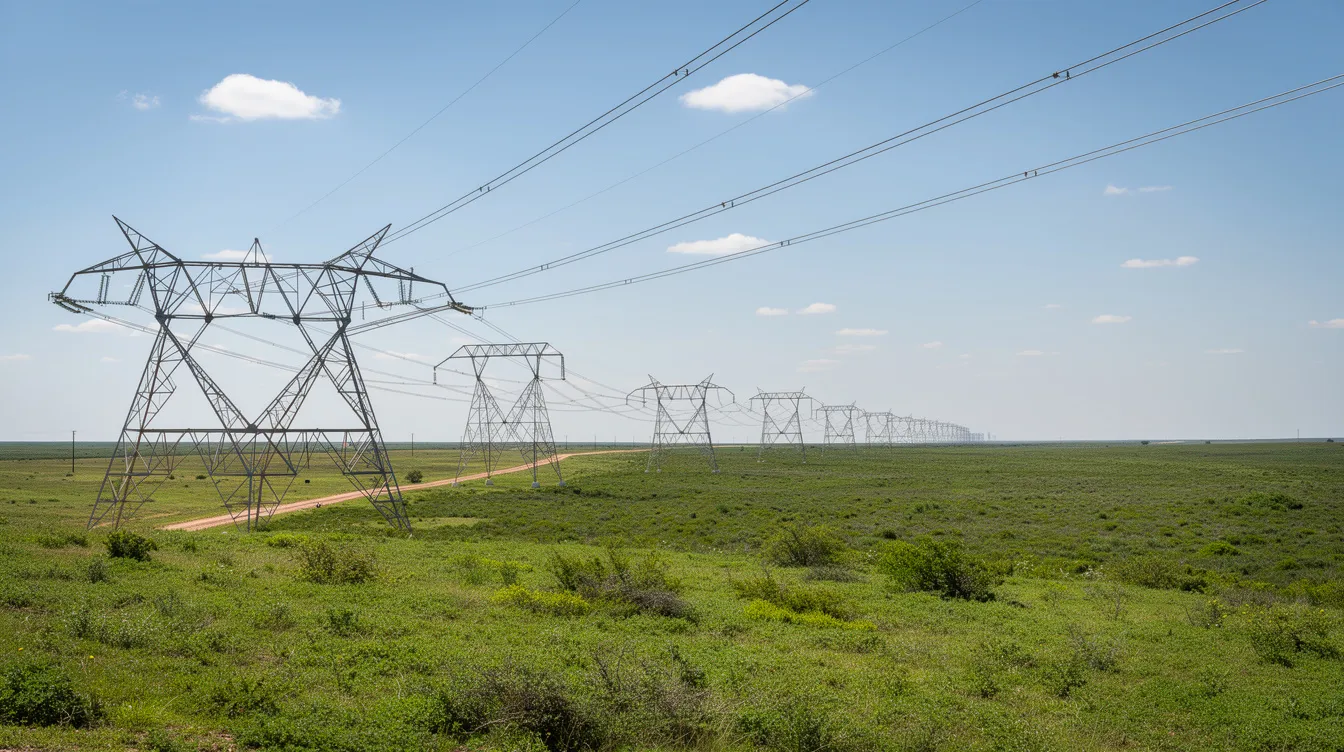
Utilities (TDUs) like CenterPoint, Oncor, AEP Texas, and TNMP own and maintain the poles, wires, meters, and transformers. Utility companies maintain the power infrastructure in Texas regardless of which provider you choose. Outages? That's on the TDU, not your REP.
Retail Electric Providers (REPs) sell electricity plans, set electricity rates, and handle billing for the supply portion of your energy bill. Retail electricity providers are also known as REPs in Texas, and they compete to offer various energy plans based on customer needs.
No matter which energy provider you select, your utility still handles infrastructure and outage restoration, so service reliability stays the same across REPs in a given area. The market separates power delivery from retail electricity sales in Texas-that's the core of deregulation.
An electricity plan is a contract that defines your rate type (fixed, variable, or indexed), contract term (month-to-month up to 36 months), fees, and any bill credits or perks. Always carefully read the Electricity Facts Label (EFL) and Terms of Service before enrolling. ABC Energy's marketplace surfaces these documents and highlights key cost drivers so you don't have to decode fine print alone.
Types of Texas electricity plans you'll see on the market
Energy plans in Texas come in a few common structures that greatly affect your final electricity bill. Understanding the differences prevents surprises.
Fixed rate plans: A set cents-per-kWh price locked in for the contract duration-typically 12, 24, or 36 months. Fixed-rate plans lock in a set price per kilowatt-hour, which protects your budget from wholesale volatility during Texas summers or winter storms.
Variable-rate plans: Month-to-month contracts where rates fluctuate monthly based on market conditions. These suit customers who need short-term flexibility-say, during a move or temporary housing.
Indexed or time-of-use (TOU) plans: Rates tied to wholesale prices or structured around off-peak periods. Providers may offer creative billing features like free nights or free weekends, which can save money if you shift heavy electricity usage to those windows. But if most of your usage falls during peak hours, these can cost more.
Specialty features: Across multiple plan types, you'll find bill credits at specific usage thresholds, green energy content, smart-home integrations, or cash-back programs.
Common types of electricity plans include fixed-rate plans, variable-rate plans, and prepaid plans. The Electricity Facts Label provides essential information about each plan-required by the PUCT-so you can see energy charge, base fees, renewable content, and cancellation terms before you sign.
ABC Energy's advisors walk residential and business customers through these plan types and model how each would affect their annual energy bill based on historical usage.
Bill credit plans in Texas: how they really affect your energy bill
Bill credit plans are among the most heavily advertised plan options in Texas. They work by applying a lump-sum credit to your bill once your monthly usage hits a certain kWh threshold. Electricity plans may offer bill credits based on monthly usage thresholds-and when your usage lines up, the savings can be significant.
Example: A plan offers a $100 bill credit if your usage falls between 1,000 and 2,000 kWh in a month. At exactly 1,000 kWh, that credit drops your effective rate dramatically. But if you only use 850 kWh, the credit vanishes entirely, and your electricity bill jumps well above the advertised average.
Several texas electricity providers structure plans this way:
Gexa Energy offers monthly bill credits for meeting usage requirements.
APG&E provides a $150 monthly bill credit for 2,000 kWh usage.
Cirro Energy has bill credit options to lower monthly bills.
4Change Energy offers affordable bill credit plans for customers.
Bill credit plans provide discounts based on monthly usage thresholds-but they are not discounts on the energy rate itself. They're lump-sum credits that reset each billing cycle and often come with minimum term lengths and early termination fees.
To evaluate whether bill credit options work for you:
Review historic usage from previous electricity bills.
Use a power bill calculator or ABC Energy's comparison tools to simulate monthly costs under several plans.
Check the EFL for exact usage ranges and bill credit amounts.
Bill credit plans can be advantageous for high-usage households-large homes in Houston running AC all summer at 2,000+ kWh. But for apartment residents or low usage homes, the credit cliff makes these risky.

Electricity rates, fees, and how to read a Texas electricity bill
The advertised electricity rate in ¢/kWh almost never matches the "all-in" cost on your electricity bill. Delivery charges, base fees, and taxes add up. Here are the main cost components:
Component - What it is - Who sets it
Energy charge (¢/kWh) - Supply cost from your REP - Your electricity provider
TDU delivery charges - Transmission & distribution fees - Regulated by PUCT
TDU base charge - Fixed monthly utility fee - Regulated (e.g., Oncor ~$4.98, CenterPoint ~$4.39)
REP base charge - Provider's flat monthly fee - Your REP ($0–$15+)
Bill credits - Lump-sum credits at usage thresholds - Your REP
Taxes & regulatory fees - Sales tax, PUCT assessment - State/local government
Worked example-Houston home using 1,200 kWh/month:
Energy charge: 10¢/kWh × 1,200 = $120.00
TDU delivery: ~3.5¢/kWh × 1,200 = $42.00
TDU base charge: $4.39
REP base charge: $9.95
Bill credit (usage met threshold): –$75.00
Taxes & fees: ~$5.00
Estimated monthly bill: ~$106.34
Without the bill credit, that same plan would cost $181.34-a 70% increase. This is why energy shoppers need to compare average prices at 500, 1,000, and 2,000 kWh as listed on the EFL. Texas regulations require REPs to disclose these usage-level estimates.
Texas customers can find energy plans tailored to their average monthly kilowatt-hour usage, and contract length can significantly impact consumer choice. ABC Energy's marketplace translates plan structures into easy-to-understand projected monthly bills based on real-world usage, reducing surprises.
Best Texas electricity providers for different customer needs (by plan type, not by brand)
The best provider depends entirely on your situation. ABC Energy doesn't promote a single REP-it matches customers to plans and features that align with actual usage, risk tolerance, and preferences.
By customer scenario:
High-usage suburban homes (1,500–2,500 kWh/month): Prioritize strong bill credit or tiered-rate plans. Look for credits that align with your summer peak. Many texans in large homes find these deliver e's cheapest plans when usage stays in the sweet spot.
Apartment residents and low usage homes: Focus on low base charges and simple fixed rates. A plan with a $0 REP base charge and moderate energy rate often beats a bill credit plan you'll never qualify for.
Green energy shoppers: Filter for 100% renewable content backed by RECs. Many provider offers in this category are now priced competitively with conventional plans.
Business customers: Seek customized, negotiated rates and long-term price stability through a commercial energy consultant.
Retail electricity providers compete to offer various plans across these categories. Customer service also matters: TXU Energy scored 4.9 out of 5 for customer service, 4Change Energy received a 4.9 out of 5 customer service rating, Express Energy earned a perfect 5 out of 5 in customer service ratings, Reliant Energy scored 4.2 out of 5 for customer service satisfaction, and Veteran Energy also received a 4.9 out of 5 customer service rating. When evaluating the best texas electricity providers, excellent customer service and strong customer service track records matter alongside the rate itself.
As of 2026, popular plans include bill credits, free nights and weekends, prepaid no-deposit options, and bundled services. ABC Energy's recommendations are based on overall value-effective electricity rates plus contract terms-rather than a single low teaser rate. That's what makes it the best provider match for most energy shoppers.
Green energy and renewable electricity plans in Texas
Texas is a major leader in wind and solar energy output, and that leadership is showing up in retail pricing. Renewable energy plans can source power from wind, solar, or other renewables through Renewable Energy Certificates (RECs).
Common renewable options:
100% green fixed-rate plans for households wanting stable, long-term clean energy
Partially green plans (20–50% renewable content) blending price and sustainability
Business green plans tailored for corporate ESG and sustainability targets
Several texas electric companies stand out in this space. Gexa Energy offers 100% green electricity plans. Rhythm Energy specializes in Texas wind and solar power. Gexa Energy and Rhythm Energy are top green energy providers. Green Mountain Energy offers fully renewable energy plans.
Price trends as of 2026: In many Texas ZIP codes, 100% renewable plans are competitively priced with conventional plans, especially on 12–36 month contracts. The premium that once made green energy a luxury has narrowed considerably-in some areas, there's virtually no difference.
ABC Energy helps customers filter for renewable content, compare green electricity rates, and choose plans that align with environmental goals without sacrificing predictable bills.

No-deposit, prepaid, and low-credit electricity options
Many texas electric companies perform a credit check when customers enroll and may charge a deposit based on credit history. But alternatives exist for those with low credit or who prefer to avoid upfront costs.
Prepaid plans allow consumers to pay in advance without credit checks. You load funds, monitor daily usage, and add more as needed.
Pros:
Fast connection and minimal barriers
Strong real-time visibility into daily usage and spend
No long-term contract in many cases
Cons:
Electricity rates can be higher than standard fixed rate plans
Risk of service interruption if balance runs out during extreme temperatures
Frequent top-ups may be inconvenient
ABC Energy can help customers with limited credit find low- or no deposit plans where available while modeling whether a standard plan (with a deposit) might be cheaper across a full year. Before choosing a prepaid plan, confirm fees, reconnection policies, and whether a smart meter is required. Customers should protect themselves by understanding the full fee structure before committing.
Month-to-month vs multi-year contracts: which electricity plan term is better?
Contract length is one of the biggest decisions you'll make. Here's how the trade-offs break down:
Month-to-month plans:
No long-term commitment
Easier if moving soon or testing a new provider
Ability to switch if date rates drop
TXU Energy offers month-to-month plans with no contracts
Variable-rate plans allow flexibility to change providers without penalty
Month-to-month plans are ideal for short-term electricity needs
12–36 month fixed-rate contracts:
Insulation from price spikes during Texas heat waves or winter events
Easier budgeting and more predictable electricity bills
Often offer competitive rates when wholesale markets are rising
Early termination fees can apply to fixed-rate plans if broken. Most ETFs range from $50 to $200+, though exceptions exist when moving outside the provider's service area. If you cancel a contract early, you pay the penalty-so align term lengths with major life events like a lease end or home purchase.
The safest approach: match your contract length to the period you're confident you'll stay at your new address.
ABC Energy's comparison tools show how different contract lengths affect your effective annual cost, helping you sign with confidence.
How to compare Texas electricity plans using real usage data
The smartest way to pick an energy provider is to compare plans using your actual kWh usage-not just advertised rates. Here's a step-by-step method:
Gather data: Collect the last 12 months of electricity bills (or at least summer and winter months). Note your monthly usage and peak months.
Set priorities: Lowest cost? Bill credits? Green energy? Short contract? No credit check?
Use a marketplace: Enter your zip code on ABC Energy's Texas rates page, input average monthly kWh, and filter by plan type.
Sort by estimated monthly cost, not just ¢/kWh. This accounts for base charges, delivery fees, and bill credits.
Confirm details before enrolling: EFL, base charges, usage requirements, early termination fees, and any special conditions.
Customers can also compare energy offers using the Power to Choose website, though ABC Energy's platform layers in side-by-side cost modeling that accounts for all fees and TDU charges.
Mini-case: A 1,000 kWh/month household in the Oncor service territory switches from a variable plan averaging 18¢/kWh to a 12-month fixed plan at 11.5¢/kWh with a $75 bill credit at 1,000 kWh. Monthly savings: roughly $50–$65, or over $600 per year. That's the difference real comparison makes.

Texas business and commercial energy plans: beyond standard residential offers
Small and medium-sized businesses in Texas's deregulated markets can also choose their electricity provider-and the stakes are often higher than residential. A restaurant or retail shop running heavy HVAC and refrigeration may consume 5,000–15,000 kWh monthly.
Commercial energy supply can involve:
Custom-priced fixed contracts based on annual usage and load profile
Index or block-and-index structures for larger users
Demand management and efficiency projects to lower peak usage charges
ABC Energy specializes in helping businesses compare electric supply rates, negotiate custom offers, and align contract terms with budget cycles. Typical business priorities include long-term price stability to protect margins, green energy procurement for ESG goals, and transparent billing across multiple locations. The company can also analyze interval data to design optimal contracts rather than simply picking off-the-shelf plans. For any business, clear pricing and affordable plans directly impact the bottom line.
Avoiding common mistakes when choosing a Texas electricity provider
Many bill shocks and complaints in Texas stem from avoidable enrollment mistakes. Here's a practical checklist:
Common pitfalls:
Choosing a plan solely on its headline rate without checking bill credits or meet usage requirements
Ignoring base fees and minimum usage charges that penalize low-usage customers
Overlooking contract length and early termination fees
Not reading the EFL or misunderstanding TOU and free nights structures
Falling for a reliant plan or any reliant energy offer-or any provider's pitch-without comparing it against alternatives at your actual monthly usage
Guard against deceptive marketing:
Verify the provider is licensed with the PUCT (this is a security service for your wallet)
Look for clear disclosure of fees and contract conditions-think of it as a security solution against bill surprises
Beware of door-to-door offers that pressure you to switch on the spot; a certain word or phrase like "limited time" shouldn't rush your decision
If a site owner or online form seems off, trust your instincts-watch for online attacks or a sql command error; if something performed triggered a cloudflare ray or cloudflare ray id found warning, or you see a cloudflare ray i notice or malformed data error, the site may not be legitimate
ABC Energy vets the suppliers it displays, screens for transparent billing, and helps customers manage complex plan language before they commit. Review your electricity bill after the first month to confirm charges match expectations-that should be a top priority for every customer.
How ABC Energy helps Texans shop smarter for electricity
ABC Energy is an independent energy service company and consultancy focused on helping residential and commercial customers compare and buy electricity and natural gas in deregulated markets.
Key tools and services:
Live comparison of electricity plans and rates from vetted Texas providers
Fixed-rate and guaranteed-savings options
Customized pricing tools for businesses
Guidance on green energy plans and energy efficiency solutions
ABC Energy emphasizes transparent billing and no hidden fees, highlighting total estimated costs instead of teaser electricity rates. Energy experts are available for one-on-one advice, and the platform delivers tailored recommendations based on your zip code, usage, and preferences. While the company has deep experience in northeastern deregulated markets, the same comparison and consulting approach applies to Texas-adapted to local utilities and most texas electricity providers.
The deregulated texas electricity market gives you real choice. Use it wisely.
Ready to find your best plan? Enter your Texas zip code on ABC Energy's marketplace, reference a recent electricity bill, and let the platform identify the most cost-effective electricity plan for your home or business. Whether you pay for power as a homeowner or run a company with locations across the state, the right plan is waiting-and it starts with accurate comparison, not guesswork.
