
Rate of Electricity: How Electricity Rates Work and How to Save with ABC Energy
Your electricity rate determines exactly how much you pay every time you flip a switch, run an appliance, or cool your home. Understanding how that rate is calculated-and where it can be lowered-is the difference between overpaying and keeping more money in your pocket. This guide breaks down how electricity rates work across the U.S., what drives them up, and how ABC Energy helps residential customers and businesses find better pricing in deregulated markets.
Quick Answer: What Is an Electricity Rate and How Is It Charged per kWh?
An electricity rate is the price you pay per kilowatt hour (kWh) of energy consumed. It matters for every home and business because even a small change in your rate per kwh directly shifts your monthly bill up or down.
As of mid-2026, typical residential electricity prices in the U.S. average around 17–18 cents per kilowatt hour, though the average price swings dramatically by state and utility. The rate appears on your electric bill as cents per kWh-for example, 12.5¢/kWh or 18.5¢/kWh.
Here's a simple example of how the rate of electricity affects your bill:
Scenario - Monthly Usage - Rate per kWh - Monthly Bill
Higher rate - 1,000 kWh - 15¢/kWh - $150
Lower rate - 1,000 kWh - 11¢/kWh - $110
The electricity cost you actually pay combines more than just the supply rate. Electricity bills typically include supply and delivery components, plus taxes and surcharges. In deregulated markets, ABC Energy helps customers compare live electricity rates from multiple electricity providers to save money on their bills.
How Electricity Prices Are Built: Supply, Delivery, and Other Charges
Electricity prices reflect multiple cost components set by utilities, regulators, and competitive suppliers. Electricity rates are determined by revenue requirements and wholesale market forces working together.
The three main parts of a typical bill break down like this:
Supply (generation): The cost of generating electricity is the largest bill component. It covers fuel, plant operations, and wholesale market procurement. Electricity prices reflect costs to build and maintain power plants.
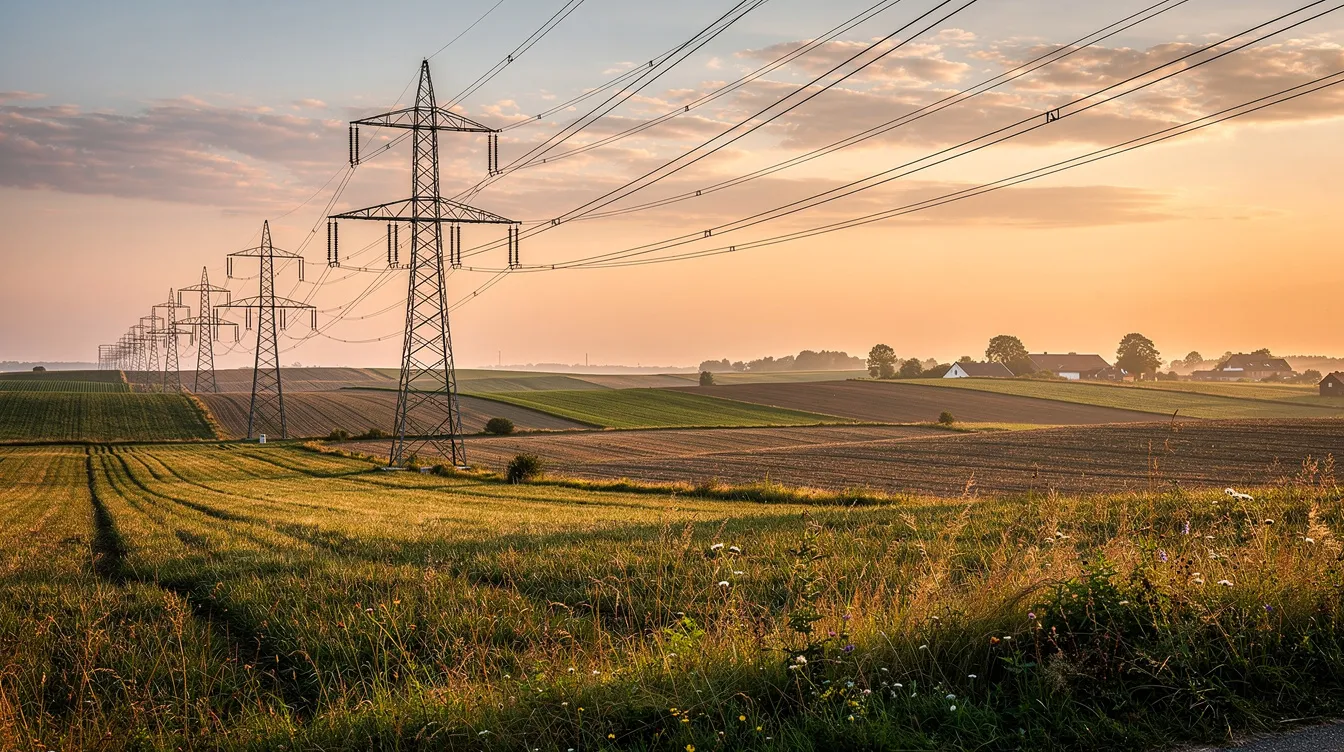
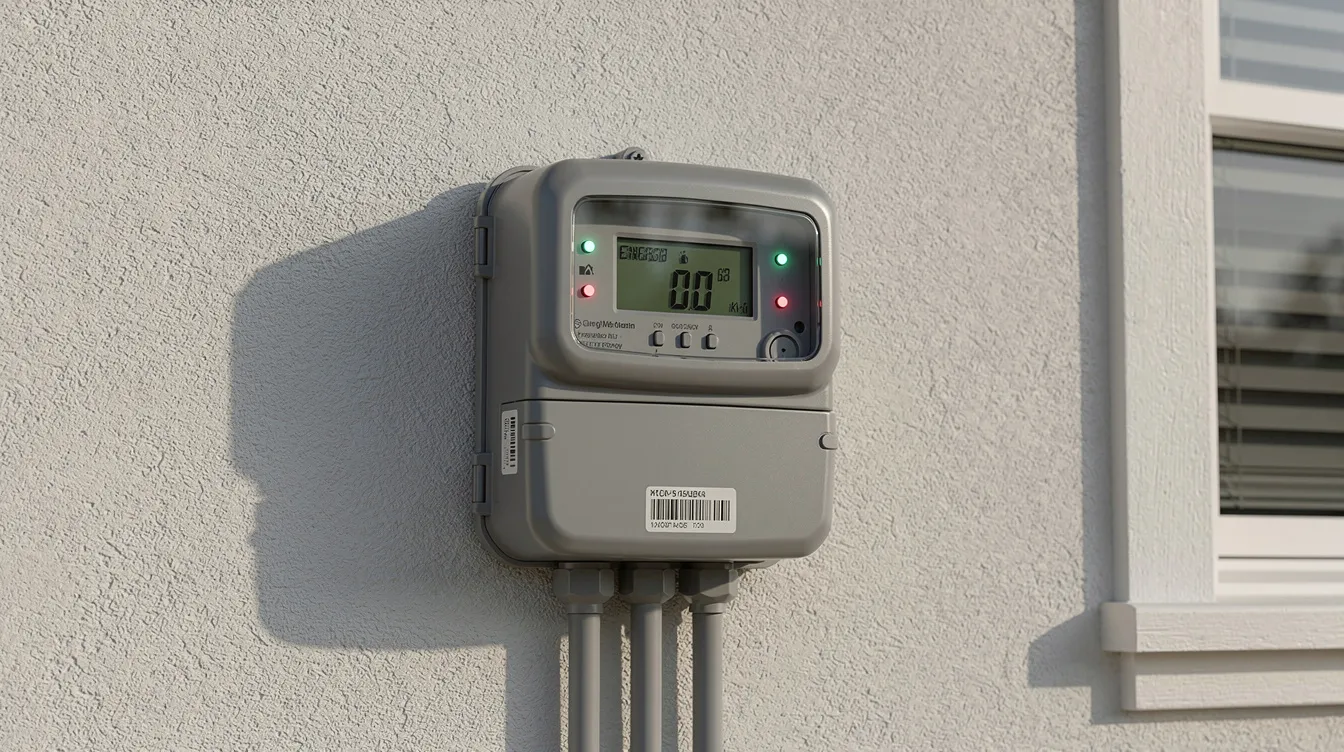
Delivery (transmission and distribution): Delivery costs include transmission and distribution expenses-wires, transformers, poles, meters, and grid upkeep. Delivery often accounts for roughly 40–60% of the total residential bill in deregulated states.
Other charges: Stranded costs cover renewable energy programs and storm recovery. For instance, after the 2024–2025 winter storms in New England, some utilities applied storm recovery surcharges. States like New York and New Jersey include renewable program fees passed to all utility customers.
Utilities calculate revenue requirements to cover operational costs and investments, then recover those through a combination of fixed and variable charges. Fixed charges on bills remain constant regardless of energy consumption-typically $10–25 per month. Variable charges scale with your kWh usage and, for larger users, peak demand. The Energy Information Administration tracks average electricity prices and how each component contributes.
Key Factors That Influence the Rate of Electricity
Electricity rates change over time and by region due to fuel prices, infrastructure spending, regulation, and weather-driven electricity demand. U.S. electricity rates rose 7.4% year-over-year as of February 2026, and some states saw far steeper increases.
The cost of fuels is a primary driver of electricity rates. Natural gas prices have been especially volatile: in 2025, Henry Hub prices rose roughly 56% versus 2024, pushing wholesale day-ahead prices up by about $29/MWh at the ISO-NE hub in New England. The mix of power sources impacts electricity costs too-states leaning heavily on imported fuels face higher supply electricity costs, while those with local wind or solar see more stable generation pricing.
Costs associated with infrastructure upgrades impact electricity pricing significantly. Wildfire mitigation in California, storm-hardening across the Mid-Atlantic, and transmission expansion projects all feed into delivery rates. The regulatory environment affects electricity pricing dynamics as well; state Renewable Portfolio Standards and capacity market rules add compliance costs that flow through to consumers.
Seasonal patterns matter. Electricity prices usually peak in summer due to high demand from air conditioning, while winter months can spike in gas-dependent regions when heating drives increased demand. Extreme weather events can cause significant price spikes in electricity rates-cold snaps and heat waves force utilities to buy more electricity on spot markets at premium prices. Surging industrial activity can create localized capacity challenges in electricity pricing, and increasing demand drives up electricity prices across the board. Maine's electricity prices increased by 22.6% year-over-year, illustrating how these factors compound in vulnerable regions.
Types of Electricity Rates: Tiered, Time-of-Use, Fixed, and Variable
Customers rarely see just one flat electricity rate. Instead, rate structures vary based on usage blocks, time of day, and contract terms. Time of consumption affects electricity pricing during peak demand periods.
Tiered rates charge progressively more as usage rises. A utility might bill 12¢/kWh for the first 600 kWh, 18¢ for the next 600, and 25¢ above 1,200 kWh during summer-encouraging conservation when demand is highest.
Time of use rates split the day into peak, mid-peak, and off peak hours. In California, summer on-peak TOU rates can reach 45–65¢/kWh during late afternoons, while overnight rates drop substantially. Customers who can shift usage-running dishwashers or charging EVs overnight-can access meaningful savings.
Fixed rate plans from competitive providers lock in a supply rate per kWh for a set period. Contract lengths for fixed-rate plans vary from 6 to 36 months. Fixed-rate plans provide price stability throughout the contract and protect against seasonal price fluctuations. For example, a fixed-rate plan in Texas might offer 11¢/kWh for 24 months versus a default utility rate of 15¢/kWh.
A variable rate plan tracks wholesale markets or utility default service pricing. While these can be cheaper during low cost periods, wholesale market pricing can lead to higher electricity rates during supply crunches. Special programs-EV charging off-peak discounts, solar net metering credits, and green energy premiums tied to renewable energy certificates-add further layers to how providers structure pricing.
Electricity Rates by Customer Type and Location
The average price of electricity differs sharply for residential, commercial, and industrial customers. Rates differ significantly between residential, commercial, and industrial customers: as of early 2026, residential rates average roughly 17.65¢/kWh, commercial around 14.37¢/kWh, and industrial closer to 8.5–9¢/kWh. Industrial customers pay less per kilowatt hour kwh because fixed costs are amortized over massive consumption volumes.
Geographic location influences baseline electricity prices. Hawaii has the highest electricity rate at 43.00¢/kWh due to imported fuel dependency. California's electricity rate is 33.22¢/kWh, the second highest, driven by stringent policy and high grid investment costs. On the other end, North Dakota has the lowest electricity rate at 11.64¢/kWh, benefiting from local wind and fossil fuel sources. Population density influences distribution costs for electricity, which partly explains why rural and less dense states often have lower delivery charges. Regional electricity rates vary due to fuel availability and local infrastructure costs.
Currently, 14 states plus D.C. have deregulated electricity markets. Deregulated markets allow consumers to choose their electricity supplier, creating wider spreads between default service and competitive supplier offers. Texas has a deregulated market with over 100 retail providers, giving consumers extensive choice. Electricity prices vary by locality based on fuel availability, recent years of grid investment, and policy decisions unique to each state.
How ABC Energy Helps You Compare Electricity Rates and Save Money
ABC Energy is a marketplace and consultancy that helps households and businesses in deregulated markets lower their electricity cost per kwh. The platform works with vetted energy companies to show live, side-by-side supply rates for electricity and natural gas in markets like New York, New Jersey, Connecticut, and Pennsylvania.
Through ABC Energy, customers can access fixed rate plans that lock in a stable rate for 12–36 months, shielding against future price increases. Fixed-rate plans typically have no hidden fees or surprises. Customers can save 15–30% by switching to fixed-rate plans compared to default utility supply rates.
Customized pricing tools like URate and EZ Rate analyze a customer's historical kilowatt hour usage to recommend the most cost-effective plans. Green and renewable energy options-including 100% renewable supply plans-can reduce exposure to fossil fuel price swings over time. Shopping for competitive rates can lower electricity bills significantly, and over 200,000 customers have switched providers through our platform. ABC Energy earns compensation from suppliers, not from customers, ensuring transparent billing and aligned incentives.
Business vs Residential Electricity Rates: What ABC Energy Does for Each
Rate structures and negotiation leverage differ considerably between homeowners and businesses. Understanding those differences is key to maximizing potential savings.
For residential customers, typical usage runs 500–1,500 kWh per month. ABC Energy helps households compare plans that match their per kWh consumption profile-whether that means a low rate fixed plan for predictable budgeting or a variable rate plan for consumers willing to monitor market conditions. Reviewing your utility bill is the first step.
Small and medium-sized businesses consume more energy in concentrated patterns-offices, retail, restaurants, and light manufacturing often use 2,000–10,000+ kWh monthly. That volume unlocks better per kilowatt hour pricing. ABC Energy's B2B service includes customized quotes and reverse auctions for larger loads, multi-meter aggregation, and load profile analysis. Businesses can also bundle natural gas supply decisions and energy efficiency projects-lighting, HVAC upgrades-with their electricity rate strategy for compounding savings.

Renewable Energy, Natural Gas, and the Future of Electricity Rates
The long-term rate of electricity is being reshaped by the growth of renewable energy, shifting natural gas markets, and evolving energy systems. Natural gas price volatility significantly affects electricity prices, and the fuel's role as a "bridge" between coal and renewables means that gas market swings will continue rippling through retail rates.
Higher penetration of wind and solar can moderate average fuel costs, but integration requires grid investments-storage, transmission expansion, and intermittency management-that increase delivery components. State and federal clean energy policies are driving utilities and electricity providers to increase renewable content, sometimes adding small surcharges but reducing long-term exposure to fossil fuel swings.
Through ABC Energy, customers can choose renewable energy supply plans that support clean generation while still seeking competitive rates. The Energy Information Administration forecasts residential electricity prices will grow roughly 2–5% per year through 2030, with the national average reaching approximately 18.2¢/kWh in 2026. Customers who lock in competitive per kWh pricing now position themselves to save as rates continue climbing.
How to Evaluate and Compare Electricity Rates per kWh with ABC Energy
Looking only at the advertised electricity rate is not enough. You need to account for usage patterns, fees, and contract terms to understand your true energy costs.
Step 1 – Understand your usage. Pull 12 months of bills and note your monthly kWh totals. Identify seasonal peaks-summer AC, winter heating if electric. This data establishes your baseline and reveals where you use more energy.
Step 2 – Focus on supply rate per kWh. Find the supply rate on your bill (separate from delivery) and compare it to current rates from competitive providers. Note whether each offer is fixed or variable.
Step 3 – Watch fees and contract terms. Check for early termination fees, minimum usage charges, and promotional rates that jump after an introductory period. A low rate with a $200 cancellation penalty may not deliver the savings it promises.
Step 4 – Use ABC Energy's comparison tools. Enter your ZIP code and a recent bill into ABC Energy's platform to see live rates, projected monthly costs at different usage levels, and plan summaries from multiple providers. For example, a customer using 1,000 kWh/month who moves from a 16¢ default rate to a 12¢ fixed plan saves $40/month-$480 over a year. Switching providers can save 15–30% on electricity bills, and consumers can save 15–30% by switching providers through a transparent comparison.
Frequently Asked Questions About Electricity Rates
Below are answers to the most common questions about electricity prices, the average price per kilowatt hour, and how to switch electricity providers.
What is a good residential electricity rate per kWh in 2026? It depends on where you live. In low-cost deregulated states, competitive supply rates in the low-teens cents per kWh are achievable. In high-cost coastal states and New England, even 20–25¢/kWh may represent a good deal relative to default service. The national average for residential electricity prices sits around 17–18¢/kWh as of mid-2026.
Why did my electricity rate increase this year? Rising natural gas costs, utility rate cases for infrastructure upgrades, and changes in default service auctions all contribute. U.S. electricity rates rose 7.4% year-over-year as of February 2026, and some states experienced far steeper jumps.
Will my rate go up if I choose a fixed-rate plan? The fixed supply rate per kWh stays constant during the contract term, delivering price stability and predictable budgeting. However, delivery charges set by your utility can still change. You can learn how delivery charges work to understand this split.
Can switching electricity providers really save me money? Yes. A customer using 1,000 kWh per month who moves from a 16¢ default supply rate to a 12¢ fixed plan through ABC Energy saves about $480 per year. Texas has over 100 retail electricity providers, and competition in deregulated markets creates real availability of lower-priced plans. Switching providers is one of the most direct ways to save on your bill.
Is renewable energy more expensive? Not necessarily. Many green plans are now competitively priced thanks to falling solar and wind generation costs and expanded tax incentives. Long-term, renewable supply offers more stable pricing than fossil-fuel-dependent plans because it removes exposure to volatile fuel sources. ABC Energy offers blended and 100% renewable options so you can compare side by side and choose the energy provider that fits both your budget and values.
