
Electricity Rates by ZIP Code (June 2026): How to Find the Best Electric Rates Where You Live
Your electricity cost depends on far more than your state-it depends on your ZIP code. Whether you're a homeowner trying to trim your monthly bill or a business owner looking for competitive rates, understanding how electric rates vary at the ZIP-code level is the first step toward paying less for power. This guide breaks down current residential electricity prices, explains what drives rate differences, and shows you exactly how to find the lowest rate where you live.
Key Takeaways
Electricity rates vary by ZIP code across the U.S., and consumers in deregulated states can often save money by comparing plans and choosing a lower-cost energy provider. Here are the most important points from this guide:
The average U.S. residential electricity rate is 17.65¢ per kwh as of June 2026, but rates can differ by 2× or more between ZIP codes-from around 11¢/kWh in North Dakota to over 40¢/kWh in some Hawaii ZIP codes.
North Dakota has the cheapest electricity at 11.64¢/kWh, while Hawaii has the most expensive electricity at 43.00¢/kWh. Rates vary from an average of 42.23 cents per kWh in Hawaii to 11.95 cents per kWh in North Dakota as of June 2026.
In 14 states plus D.C., deregulated markets allow consumers to choose their electricity supplier, and switching providers can save 15–30% on electricity bills.
ZIP codes determine available electricity providers in deregulated states, making your zip code the single most important input when shopping for a new energy plan.
ABC Energy helps residential customers and commercial customers in deregulated markets compare electric rates by ZIP code, lock in fixed rate plans, and reduce overall energy costs with transparent billing and no hidden fees.
Electricity Cost by ZIP Code: Why It's So Different Across the U.S.
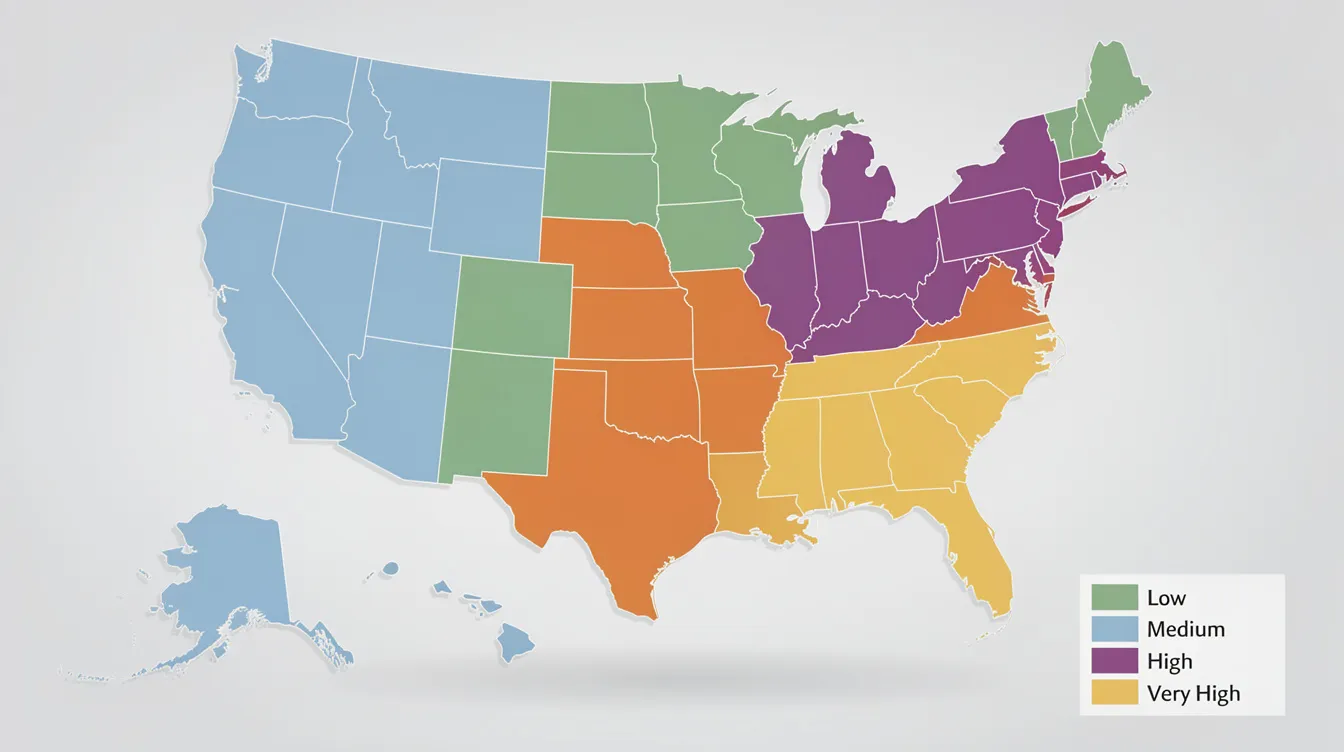
Electricity prices can vary by more than 2× between neighboring regions. Your zip code defines your utility territory, the electricity providers available to you, and the local taxes and surcharges applied to your bill. Two homes separated by a single ZIP-code boundary can face dramatically different energy costs.
Consider this: a residential customer in a Honolulu, HI ZIP code pays roughly 44.1¢/kWh for power, while a household in an Omaha, NE ZIP code pays about 10.6¢/kWh. That means the Hawaii household's monthly electricity bill for 1,000 kWh of electric energy usage would exceed $440, while the Nebraska home pays around $106 for the same consumption.
State averages-like the national average of about 18 cents per kwh-hide large differences between urban and rural ZIP codes and between coastal and inland areas. ZIP codes in large metro areas like New York (10001 or 11201) can show residential electricity rates above 30–35¢/kWh once delivery charges and taxes are included, while many Midwestern ZIPs remain in the low teens.
For businesses, commercial rates in the same ZIP are often 15–25% lower than residential rates, but they still follow the same ZIP-level patterns. Rates are influenced by utility provider territory and local taxes, so commercial customers should always check rates specific to their location.
How Much Does Electricity Cost in the U.S. Right Now?
According to the latest data from the Energy Information Administration, the national residential electricity rate averages roughly 17.65¢/kWh as of early-to-mid 2026, up about 5–6% from early 2025. Some states have seen even sharper increases-electricity rates in Maine increased by 22.6% year-over-year.
Here's what that average rate means for your monthly bill at different usage levels:
Light use (500 kWh): ~$88/month before fees and taxes
Average home (1,000 kWh): ~$155–$165/month before local fees
High use (2,000 kWh): ~$330/month or more, depending on your ZIP
Commercial electricity rates average 14.37¢/kWh nationally-roughly 15–20% less than residential electricity prices. That gap exists because businesses tend to consume more electricity at steadier loads, which is cheaper for utility companies to serve.
Keep in mind that the cents per kwh on your actual bill can differ from headline rates. Local municipal taxes and franchise fees can increase electricity costs, and fixed monthly fees of $5–$15 get folded in regardless of your monthly usage.
Why Your ZIP Code Matters More Than State Averages
Your zip code maps directly to your local utility, delivery charges, municipal taxes, and-in deregulated states-the list of energy companies and plans you can choose from. Consumer delivery fees reflect local infrastructure costs, and transmission and distribution fees vary by region, so two homes using the same 1,000 kWh per month can face very different bills.
Utility service territories are determined by the types of utilities such as investor owned utilities, cooperatives, and municipal providers. A home inside a high-cost municipal utility territory might pay several cents per kWh more in delivery than a neighbor served by an investor-owned utility with lower tariffs.
In deregulated areas, entering your zip code determines which retail electricity providers you can choose, which fixed-rate plans are available, and whether special time-of-use or green energy plans are offered. For example, a Texas ZIP like 76102 in Fort Worth may show plans as low as around 8.5¢/kWh in June 2026, while the local default utility rate runs several cents higher.
Even within the same state-such as New York or Pennsylvania-suburban ZIPs may participate in community aggregation programs that lower electricity prices, while nearby ZIPs without aggregation pay the standard rate. That's why checking state electricity rates alone isn't enough.
Electricity Rates by State vs. by ZIP Code
State-level electricity rates are useful for quick comparison, but ZIP-level numbers give more precise guidance for making informed decisions about your energy plan.
The most expensive states for residential electricity in early 2026 include:
Hawaii: ~44.1¢/kWh (Hawaii has rates over 40¢/kWh in some ZIP codes)
Alaska: ~37.6¢/kWh
California: ~32.7¢/kWh
Massachusetts: ~29.2¢/kWh
Connecticut: ~28.5¢/kWh
The cheapest states include:
Nebraska: ~10.6¢/kWh
Washington: ~11.2¢/kWh (benefiting from abundant hydroelectric power)
North Dakota: ~11.3¢/kWh (North Dakota has rates around 11¢/kWh in certain areas)
Idaho: ~11.4¢/kWh
Utah: ~12.1¢/kWh
Within each of these states, ZIP codes with different utilities, transmission costs, or municipal programs still show noticeably different electric rates. New England states like Rhode Island and Connecticut illustrate this well-average rates are high statewide, but individual ZIPs served by community choice programs can sit meaningfully below those averages.
Always check electricity rates by zip code rather than relying solely on state averages. The data sourced from state-level reports is a starting point, not the final answer.
Can You Switch Electricity Providers by ZIP Code to Save Money?
In 14 states plus D.C., deregulated electricity markets allow consumers to choose their electricity supplier. Your zip code controls which offers and energy plans are available-making it the key input for anyone looking to switch providers.
ABC Energy is especially active in deregulated states like New York, New Jersey, Connecticut, and Pennsylvania. Ohio and Illinois also have competitive electricity markets for consumers, and Texas has over 100 retail electricity providers in its deregulated market. Deregulated areas allow competition among Retail Electric Providers, which drives down the supply portion of your bill.
Here's a practical example: in a deregulated ZIP code, a homeowner might switch electricity providers from a month-to-month utility default rate of around 14–16¢/kWh to a 12–24 month fixed-rate plan around 8.5–11.0¢/kWh. Consumers can save 15–30% by switching to fixed-rate plans. For a household using 1,000 kWh per month, that difference could mean saving more than $300–$400 per year. Comparing plans helps find lower rates in deregulated states.
Commercial electricity rates by ZIP code can be even more competitive. Small and medium-sized businesses can negotiate lower cents per kwh and better contract terms through customized quotes. Deregulated markets allow consumers to choose fixed-rate plans that provide price stability and help avoid unexpected rate increases.
What Drives Electricity Cost in Your ZIP Code?
Your electric rate is shaped by fuel mix, infrastructure, market structure, and local policy choices-all of which vary by region and ZIP. Electricity rates vary drastically based on fuel sources and market regulations.
Fuel mix matters enormously. Natural gas accounted for 41% of U.S. electricity generation in 2025, making it the dominant fuel source. Texas produced 13 trillion cubic feet of natural gas in 2024, helping keep rates low in regions with abundant natural gas. Coal accounted for 13% of U.S. electricity generation in March 2026. States with access to hydroelectric power-like Washington and Idaho-enjoy some of the lowest average rates in the country. Meanwhile, Hawaii relied on petroleum for 65% of its electricity in 2024, and its dependence on imported petroleum and imported fuel is the primary reason it remains the most expensive state. Wind energy and solar are growing but haven't yet displaced fossil fuels as dominant price drivers in most regions.
Infrastructure and density also matter. Underground lines in dense cities cost more to build and maintain than overhead lines in rural areas, raising urban electricity prices. Rural areas face their own challenge: fewer customers per mile of wire pushes per-customer delivery costs higher.
Market structure is the third major factor. Customers in fully regulated ZIP codes must buy supply from their local utility, while those in deregulated ZIPs can shop among competing providers for a low rate.
Electric rates often peak during summer and winter due to seasonal demand-think heavy air conditioning in Texas or heating demand across New England. Local taxes and surcharges push final electricity prices up or down by several cents per kwh depending on your location.
How to Estimate Your Monthly Bill Using Your ZIP Code
You can get a close estimate of your bill by knowing your ZIP code's average electricity rate and your monthly usage in kWh. Here's a simple three-step process:
Find your ZIP's average residential rate. Use a utility rate database or marketplace to look up your area's current rate-for example, 15.0¢/kWh.
Estimate your monthly usage. Check your last few bills. A typical U.S. home uses about 900–1,000 kWh per month.
Multiply rate × usage. A home at 15.0¢/kWh using 1,000 kWh pays about $150 in energy supply charges. Add a fixed monthly fee of $5–$15 and taxes of roughly 5–10% to estimate a final bill near $165–$180.
For commercial customers, follow the same approach using your commercial rate (for instance, 12.0¢/kWh from your rate structure information), but also account for demand charges or time-of-use pricing if those appear on your tariff. Businesses that use more electricity during off peak hours can often keep their effective cost well below the headline average.
How to Lower Your Electricity Cost in Your ZIP Code
While you can't change your zip code, you can usually lower your effective electricity cost through better rate plans and smarter energy usage.
In deregulated ZIP codes, the fastest way to save money is to switch from a variable or default rate to a lower fixed-rate plan. Fixed-rate plans lock in electricity prices for the contract duration, shielding you from seasonal spikes. Locking in before high-demand summer or winter seasons is especially valuable-consumers can save 15-30% by switching providers in deregulated markets.
Energy efficiency upgrades deliver the second layer of savings:
LED lighting throughout your home can cut lighting energy by 75%
Smart thermostats reduce heating and cooling waste
Energy star appliances use less electricity than older models
Homes using these upgrades often lower monthly bills by $40–$120
Here's a concrete example: a household in a ZIP with 18¢/kWh rates that cuts usage from 1,200 kWh to 900 kWh saves about $54 per month-over $640 per year-purely through reduced consumption.
Businesses in high-cost ZIP codes should consider demand management, off-peak scheduling, and customized commercial electricity rates through an energy consultant like ABC Energy to reduce overall energy costs and better align their energy needs with their budget.
How ABC Energy Helps You Compare Electric Rates by ZIP Code
ABC Energy is an energy marketplace and consultancy that lets residential and commercial customers compare live electricity prices by zip code in deregulated markets. When you enter your zip code, ABC Energy pulls real-time offers from vetted electricity providers and displays fixed-rate, green energy, and special savings programs side by side-acting as a free storehouse of competitive rates.
ABC Energy serves homeowners and businesses in deregulated states such as New York, New Jersey, Connecticut, and Pennsylvania, with tools like URate and EZ Rate to simplify plan selection. The service focuses on transparent billing, no hidden fees, and easy enrollment, so customers can lock in stable cents per kwh and avoid surprises on their bill. ABC Energy also helps customers compare natural gas rates alongside electricity. Your utility still delivers power after switching providers-only the price and terms of your energy plan change.
Commercial customers can request customized pricing by ZIP code, leveraging ABC Energy's consultant team to negotiate commercial electricity rates aligned with their specific usage patterns, renewable energy preferences, and risk tolerance.
About Our ZIP-Level Electricity Rate Data and Updates
National and state averages referenced in this article are data sourced from the U.S. Energy Information Administration, typically with a 1–2 month data lag. ZIP-level prices are derived from mapped utility tariffs and active retail offers in deregulated markets. Our editorial content aims to present the most current information available.
Some ZIP codes span multiple utilities or both regulated and deregulated territories, so ABC Energy displays all relevant options where customers have a choice of providers. Rates vary by contract length, usage tiers, and seasonal conditions-prices you see in June 2026 may differ from those in winter 2026–2027.
Review your electricity rate at least once or twice a year, especially when your contract nears expiration or when your local utility announces rate changes. Any specific rate examples given (such as 8.5¢/kWh plans in a particular ZIP) are time-sensitive. Always check current offers with your zip code for the latest data and to make more informed decisions.
FAQ: Electricity Rates by ZIP Code
How do I find the cheapest electricity rate in my ZIP code?
Start by entering your zip code into a reputable marketplace like ABC Energy's platform to see all available residential and commercial plans side by side. Compare more than just the lowest advertised cents per kwh-check contract length, early termination fees, minimum usage requirements, and whether the plan is fixed-rate or variable. Look at your last 12 months of kWh usage and choose an energy plan whose pricing aligns with your typical consumption. Re-check every 6–12 months, because new providers and promotions regularly change which plan offers competitive rates in a given ZIP code.
What is the difference between an electricity provider and my local utility?
In deregulated states, the utility owns and maintains the poles, wires, and meters, delivers the power, and responds to outages regardless of which energy provider you choose. The electricity provider (or ESCO) sells you the energy supply itself and sets the cents per kwh, contract terms, and energy mix-including renewable energy options. Your monthly bill may still come from the utility, but it lists the chosen provider's electric rate separately from delivery charges. When you switch providers through ABC Energy, the physical delivery of electricity does not change-only the cost and terms of your plan do.
Are commercial electricity rates always cheaper than residential rates?
Commercial electricity rates are often-but not always-lower than residential rates, typically running 15–25% less per kwh on average. However, many businesses pay additional demand charges or have time-of-use rates, so their total bill depends on when and how they use electricity, not just the base rate. Business owners should seek customized quotes using their ZIP code and actual interval usage data. Even small businesses can benefit from competitive shopping in deregulated states, especially if they operate during off peak hours or can shift load to lower-cost periods.
How often do electricity rates change in my ZIP code?
Utility default rates usually adjust a few times per year-typically every 3–6 months-while competitive retail offers may change weekly or even daily based on wholesale electricity markets and electricity demand. Significant events like natural gas price spikes, extreme weather, or regulatory changes can trigger noticeable shifts. Check available average rates well before your existing contract expires, and avoid waiting until peak summer or winter if you want to lock in a lower fixed rate with price stability.
Can I lower my electricity bill if I live in a high-cost ZIP code?
Even in high-cost ZIP codes-such as coastal cities or expensive states-you can often reduce your electric bill by combining a competitive fixed-rate plan with targeted efficiency measures. For example, a household paying 30¢/kWh that cuts usage by 300 kWh per month saves about $90 monthly, and can save even more by switching from a variable rate to a fixed-rate plan at 24–26¢/kWh. Insulation upgrades, smart thermostats, and efficient appliances have especially fast paybacks when local rates are high. ABC Energy can help customers in deregulated high-cost ZIP codes identify the best available rates and structure a longer-term plan to manage future price spikes and meet their energy needs.
